
Sustainable Teamwork Beyond Hero Culture: How Resilient Organizations Build Lasting Systems of Collaboration
True organizational resilience relies not on crunch-time heroics, but on structured systems of shared responsibility, transparent communication, and adaptive learning.
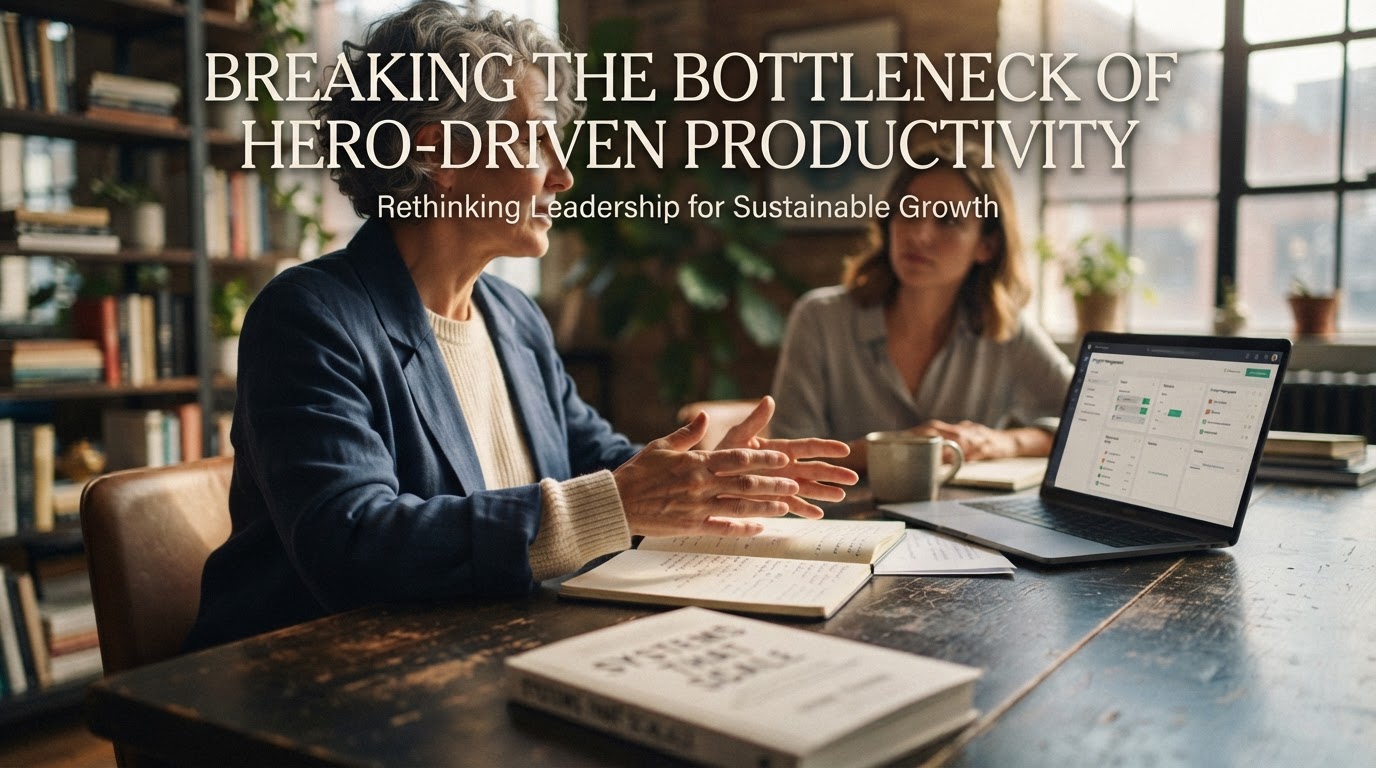
When organizations face high-stakes deadlines, their default survival mechanism is often heroism. A few key players step up, pull late nights, and single-handedly drag projects across the finish line. While this approach might yield short-term victories, it is fundamentally unsustainable. True organizational resilience requires moving away from crisis-driven sprints and toward frameworks that maintain momentum without exhausting talent or burning out teams.
Sustainable collaboration is the art of creating working conditions that perform reliably across changing environments. It does not rely on perfect information, endless resources, or flawless execution. Instead, it relies on shared structures that allow teams to communicate, adapt, and distribute responsibility seamlessly.
Breaking the Bottleneck of Hero-Driven Productivity
In many workplace environments, high-pressure situations naturally elevate the loudest or most experienced voice. While strong leadership is essential, over-reliance on a single individual creates a dangerous dependency. When one person controls decision-making and problem-solving, team momentum stalls the moment that individual becomes unavailable or overwhelmed.
Resilient organizations operate on a model of distributed ownership. Ownership does not mean everyone does every task; rather, it means team members understand their core roles while remaining agile enough to shift responsibilities as situational demands change. This dynamic allows leadership to rotate organically based on the problem at hand rather than rigid organizational hierarchy.
When team members are empowered to take initiative, test hypotheses, and step into distinct supporting roles, the organization builds built-in redundancy. A team capable of redistributing responsibility will continue moving forward even when primary decision-makers lack complete answers.
Fluid Communication and the Elimination of Friction
Redundant work and wasted effort rarely stem from a lack of skill; they usually result from information silos. When team members hoard progress updates, withhold incomplete ideas, or assume others already know what they know, friction builds rapidly. The resulting misunderstandings lead to duplicated tasks, conflicting strategies, and unnecessary workplace frustration.
Sustainable collaboration prioritizes early, iterative communication over polished perfection. High-performing teams share observations while they are still raw, enabling colleagues to connect disparate clues before significant time and energy are squandered.
Crucially, this open flow of information relies on psychological safety. When employees believe that sharing incomplete data or surfacing early concerns will be met with criticism, they withhold critical insights until it is too late. Building trust means creating an environment where tentative ideas are viewed as constructive contributions to collective problem-solving rather than evidence of incompetence.
Harnessing Cognitive Diversity for Strategic Agility
Complex challenges demand more than one mode of thinking. While analytical minds excel at identifying underlying patterns, detail-oriented individuals spot subtle inconsistencies, and empathetic communicators keep the group aligned and calm under stress. Organizations often fail not because they lack talent, but because they fail to utilize the full spectrum of their team's cognitive diversity.
When teams welcome varied operational strengths, the quality of their decision-making improves exponentially. The quietest team member might notice a pivotal operational detail that others overlooked, while a colleague who struggles with strategy might excel during execution.
Furthermore, cognitive diversity enables strategic agility. Under pressure, rigid teams often double down on failing strategies simply because they have already invested resources in them. Adaptive teams treat unsuccessful attempts as diagnostic data rather than personal failures. By balancing analytical rigor with the willingness to pivot, resilient teams preserve their momentum without falling prey to sunk-cost fallacies.
Translating Experiential Insights into Workplace Systems
Simulated challenges and team-building exercises are frequently used to illustrate these dynamics, but the real value lies in post-experience reflection and systemic translation. Experiencing cross-functional alignment in a controlled environment is only useful if it alters daily operational habits.
Organizing for shared success requires breaking down departmental barriers. A sales team or product division might achieve its localized goals, but if those achievements fail to support the overarching organizational mission, total progress remains stagnant. Sustainable collaboration demands that isolated achievements yield to collective strategic outcomes.
To turn collaborative insights into permanent operational habits, leaders must facilitate structured debriefs. Teams should regularly analyze where communication bottlenecks occurred, how responsibilities were distributed, and how decision-making can be streamlined for future projects. By establishing regular pause points to evaluate processes—not just outputs—organizations embed sustainable collaboration into their cultural DNA.